
A nose that never settled into the shape a patient hoped for, or one that makes breathing harder months later, often sends people looking for a second opinion. Revising it takes more precision than the original surgery, since the surgeon has to work around scar tissue and a nasal structure that's already been altered. That level of correction calls for a surgeon whose entire practice is built around the face. Dr. Ronald J. Caniglia, a double board-certified facial plastic surgeon with more than three decades of experience, and his son Dr. Alex J. Caniglia, a fellowship trained facial plastic surgeon built their Scottsdale practice on that exact focus.
This blog covers what typically sends patients back for a second nose surgery, and why specialized training matters so much once revision is on the table.
When a Second Nose Surgery Becomes Necessary
Most revision patients are unhappy with how their nose looks, struggle to breathe as well as before the first surgery, or both. Common reasons patients seek revision rhinoplasty include:
- Visible asymmetry, a pinched tip, or an uneven bridge
- Nasal breathing that feels more restricted than before the original surgery
- Thick internal scarring that has distorted the nose's shape
- A result that never matched the patient's original goals
- Injury to the nose after the first surgery had fully healed
Some of these issues appear within months. Others take a year or more to fully show up, since swelling needs time to resolve before the nose settles into its final shape.
Why a Second Surgery Is More Complicated Than the First
A primary rhinoplasty works with untouched cartilage and an intact blood supply, conditions a revision rarely offers. The American Academy of Facial Plastic and Reconstructive Surgery notes that revision cases carry a higher risk of complications and a longer recovery than first-time surgery, largely because of the scar tissue and altered anatomy left behind by the original procedure. Surgeons often find less usable cartilage than expected, since earlier surgery may have already trimmed or reshaped it.
When that happens, surgeons may need to harvest cartilage from elsewhere in the body, often the ear or rib, to rebuild structural support and restore both shape and airflow. Working through scarred tissue to place that graft accurately is where a surgeon's depth of nasal experience matters most.
Why Facial-Only Training Matters for These Cases
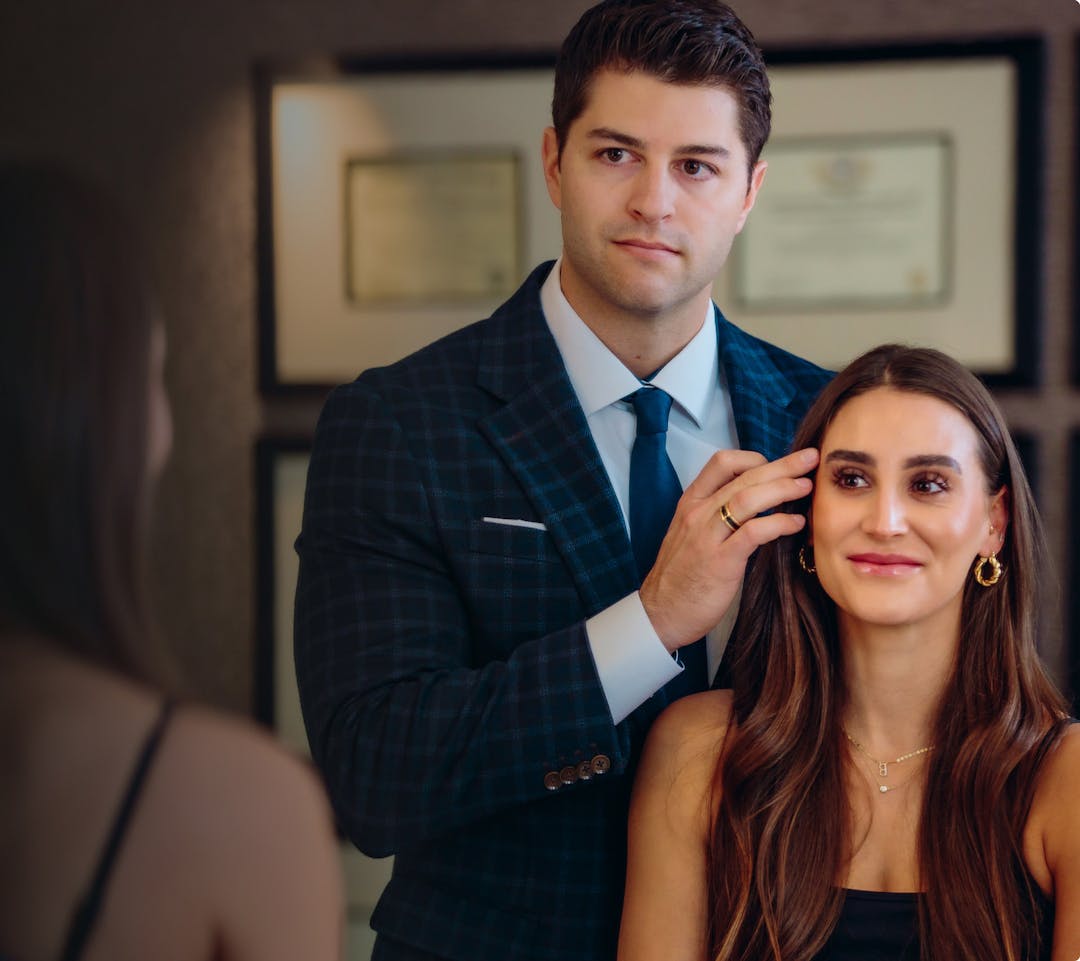
Dr. Ron Caniglia and Dr. Alex Caniglia treat only the face, and revision rhinoplasty is one of their areas of focused expertise. Dr. Ron Caniglia has spent more than three decades concentrated exclusively on facial and nasal surgery, giving him a detailed understanding of how noses age, shift, and heal after a prior operation. Dr. Alex Caniglia completed an advanced fellowship in facial plastic surgery and performed more than 2,000 procedures during his residency, most focused on the face, neck, and nose.
Together, the father and son team bring two strengths to a revision case: decades of pattern recognition paired with training in current reconstructive techniques. That combined focus on one structure, the nose, shows in how carefully they plan around scar tissue and airway correction.
Get the Result You Wanted the First Time
A disappointing first rhinoplasty doesn't have to be the final result. Correcting asymmetry, scar tissue, and airflow issues calls for surgeons who understand the nose at this level of depth, exactly what a father-son team focused solely on facial plastic surgery brings to a revision case. Schedule a consultation with Caniglia Facial Plastic Surgery in Scottsdale to explore your options.
This information is provided for educational purposes only and does not replace a consultation with a facial facial plastic surgeon. Outcomes, risks, and suitability vary from patient to patient.