Wrinkles form on the surface, but volume loss reshapes the face from within. The gradual depletion of fat, collagen, and bone beneath the skin is what truly changes how your face looks over time, creating hollow cheeks, sunken temples, and sagging contours that no topical treatment can correct. It's often the reason you look different in the mirror but can't quite explain why.
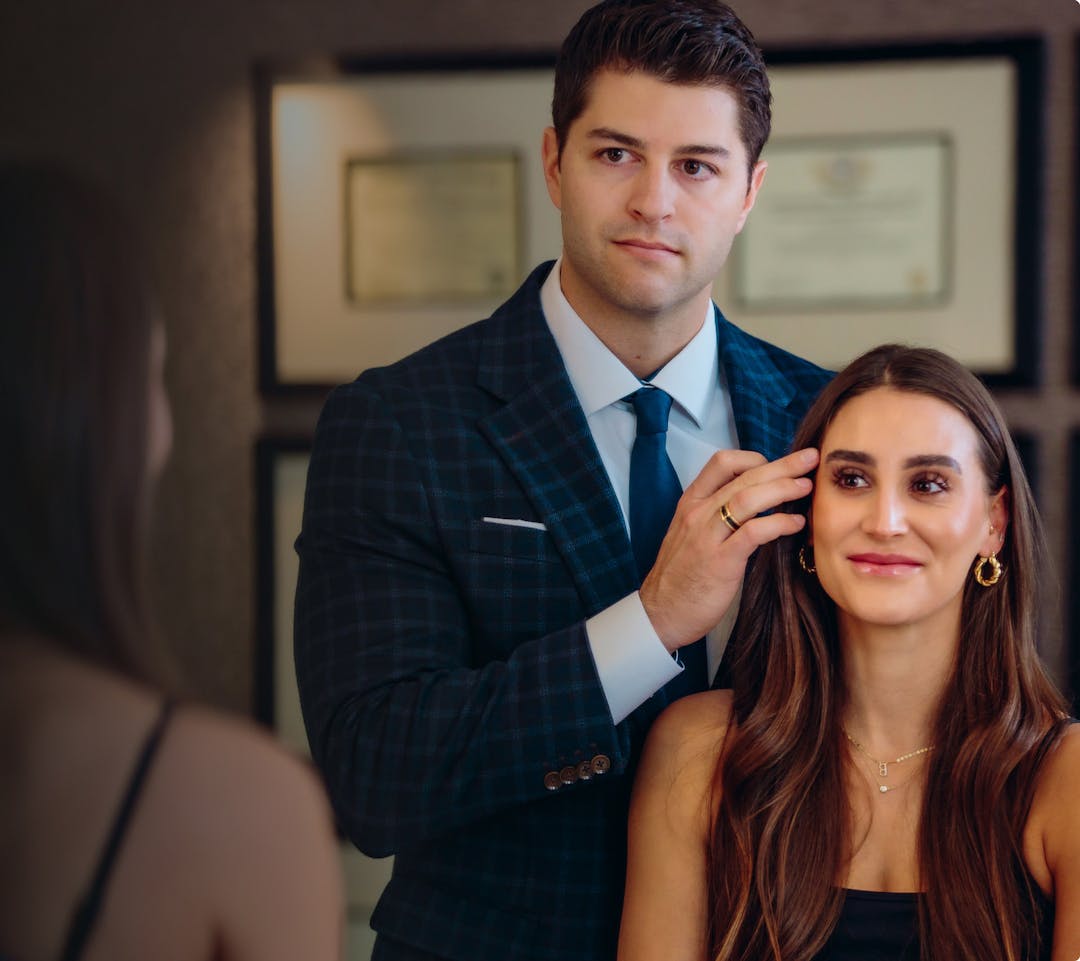
Dr. Ronald J. Caniglia, MD, a double-board-certified facial plastic surgeon, and Dr. Alex J. Caniglia, MD, a fellowship-trained facial plastic surgeon, have spent a combined three-plus decades focused exclusively on the anatomy and aesthetics of the face. This father-son team at Caniglia Facial Plastic Surgery in Scottsdale, Arizona, understands that true facial rejuvenation goes beyond surface-level treatments. Restoring lost volume, particularly through facial fat grafting, is often the key to helping patients look naturally refreshed rather than simply "smoother."
In this blog, we will discuss what causes facial volume loss, why it ages the face more than wrinkles alone, where volume loss occurs first, and how facial fat grafting can restore what time takes away.
What Causes Facial Volume Loss?
Aging affects every structural layer of the face, not just the skin. According to the National Library of Medicine, the face contains distinct superficial and deep fat compartments that deflate and shift as we age, contributing to a hollow, tired appearance. Collagen production also begins to decline by roughly 1% per year starting in your mid-20s, weakening the structural scaffolding that keeps skin firm and lifted.
Several factors accelerate this process, such as:
- Natural aging: Fat pads shrink and descend, while collagen and elastin production slows steadily over time.
- Bone resorption: The jawbone, cheekbones, and orbital bones gradually lose density and reshape, reducing support for the overlying soft tissue.
- Hormonal changes: Declining estrogen levels — particularly during menopause — can cause subcutaneous fat to thin significantly, accelerating facial hollowing.
- Sun exposure and lifestyle habits: UV damage, smoking, stress, and poor nutrition break down collagen faster than the body can rebuild it.
Understanding these causes helps explain why wrinkle-only treatments can fall short. The deeper structural changes are what truly alter facial appearance.
Why Volume Loss Ages the Face More Than Wrinkles
Wrinkles form on the surface, but volume loss reshapes the face from the inside out. Research published in Plastic and Reconstructive Surgery found that patients lost an average of 11.3% of their superficial facial fat and 18.4% of their deep facial fat over roughly a decade. That deep fat loss is especially impactful because it creates a cascading effect: the overlying tissue loses its support and begins to sag.
Here's why volume depletion has a more profound visual impact than fine lines:
- Facial contour changes: Deflated cheeks, hollow temples, and a less-defined jawline fundamentally alter your facial shape in ways that wrinkles alone do not.
- Shadow patterns shift: Volume loss changes how light falls across the face, creating deeper shadows under the eyes and around the mouth that make you look tired or drawn.
- Skin laxity compounds: Without adequate fat beneath it, skin has nothing to drape over smoothly — resulting in sagging, jowling, and deepened nasolabial folds.
- An overall "deflated" look: Many patients describe the change as looking gaunt or exhausted, even when they feel healthy and well-rested.
Simply smoothing wrinkles without addressing the volume beneath them can create an unnatural, flat result. True rejuvenation requires restoring the face's three-dimensional structure.
Where Does Volume Loss Show First?
Volume doesn't disappear uniformly. Certain areas of the face are more susceptible to early fat loss, which is why aging can look different from person to person. However, a few key zones tend to show changes before others, such as:
- Temples: One of the earliest areas to hollow, creating a narrowing of the upper face that subtly shifts proportions.
- Midface and cheeks: The malar fat pad — which the Cleveland Clinic identifies as critical to youthful midface fullness — deflates and descends, flattening the cheeks and deepening smile lines.
- Under-eye area: Loss of volume beneath the eyes reveals the tear trough, creating the appearance of dark circles and a sunken look.
- Lips and perioral region: Thinning lips and a longer upper lip are common signs of volume depletion around the mouth.
- Jawline: Fat loss combined with bone resorption softens a once-defined jawline and contributes to jowl formation.
How Facial Fat Grafting Restores What's Been Lost
Facial fat grafting, also known as autologous fat transfer, is one of the most effective ways to address age-related volume loss. The procedure uses your body's own fat, harvested from a donor site such as the abdomen or thighs, and precisely reinjects it into areas of the face that have lost fullness.
Key benefits of facial fat grafting include:
- Natural results: Because the filler is your own tissue, the look and feel are remarkably natural — no synthetic materials involved.
- Dual benefit: Fat grafting restores volume while simultaneously enhancing skin texture, tone, and overall quality in the treated area.
- Long-lasting outcomes: Unlike temporary dermal fillers that require repeated treatments, fat grafting can offer results that last for years.
- Versatility: The procedure can address multiple areas of the face in a single session, from hollow cheeks and temples to deep under-eye circles and thinning lips.
Dr. Ronald J. Caniglia, MD, has refined fat grafting techniques throughout his career, and Dr. Alex J. Caniglia, MD, brings the latest advances from his fellowship training under world-renowned facial plastic surgeons.
Restore Your Facial Volume With Caniglia Facial Plastic Surgery
If you're noticing changes that go deeper than fine lines, hollow cheeks, sunken temples, or a loss of facial definition, schedule a consultation with Caniglia Facial Plastic Surgery in Scottsdale today. Call (480) 939-6709 or contact us online to take the first step toward restoring your natural, youthful contours.